Understanding Compound Interest: How Your Money Grows
The Most Powerful Concept in Finance
Albert Einstein supposedly called compound interest the "eighth wonder of the world." Whether he actually said that is debatable, but the sentiment is spot on. Compound interest is the reason why a small amount of money saved consistently over decades can grow into something substantial — and why starting early matters more than starting big.
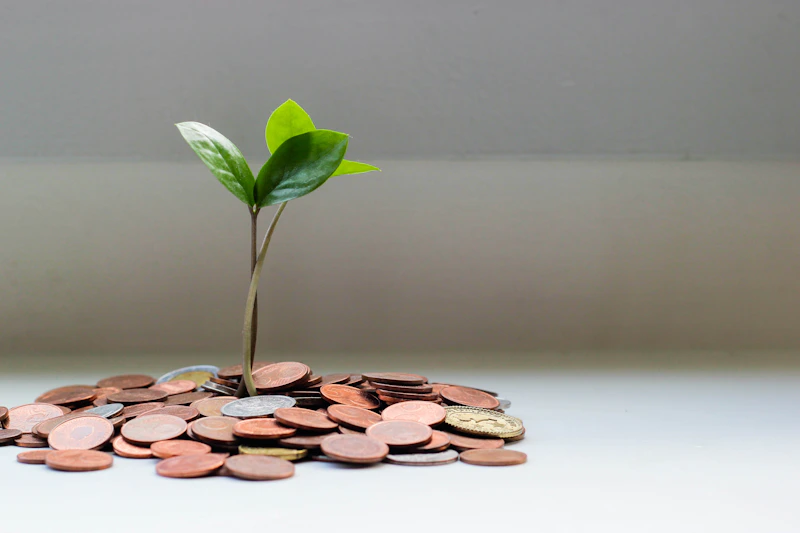
The concept is simple: when you earn interest on your money, and then earn interest on that interest, your money starts growing exponentially. It's like a snowball rolling down a hill — it starts small, but picks up more and more snow (and speed) as it goes.
Simple vs. Compound Interest
To understand compound interest, it helps to contrast it with simple interest. With simple interest, you earn the same amount every period based on your original deposit. If you put $1,000 in an account at 5% simple interest, you earn $50 every year. After 10 years, you have $1,500.
With compound interest, you earn interest on your interest. That same $1,000 at 5% compounded annually earns $50 the first year, but $52.50 the second year (5% of $1,050), then $55.13 the third year, and so on. After 10 years, you have $1,628.89. Same deposit, same rate, noticeably more money.
The difference gets more dramatic over time. After 30 years, simple interest gives you $2,500. Compound interest gives you $4,321.94. That's an extra $1,821 just from the math working in your favor.

The Three Factors That Matter
How much your money grows through compound interest depends on three things:
1. The interest rate. Higher rates mean faster growth. The difference between 4% and 7% might not sound like much, but over 30 years on $10,000, it's the difference between $32,434 and $76,123. That's more than double.
2. Time. This is the big one. The longer your money compounds, the more dramatic the growth becomes. Someone who starts investing $200/month at age 25 and earns 7% will have over $525,000 by age 65. Someone who starts the same plan at age 35? About $244,000. That's the cost of waiting 10 years.
3. How often it compounds. Interest that compounds daily grows faster than interest that compounds monthly, which grows faster than annual compounding. The difference isn't huge, but it adds up. Our Compound Interest Calculator lets you compare different compounding frequencies side by side.
The Rule of 72
Want a quick mental math trick? The Rule of 72 tells you approximately how long it takes your money to double. Just divide 72 by your interest rate. At 6% interest, your money doubles in about 12 years (72 ÷ 6 = 12). At 9%, it doubles in 8 years. At 3%, it takes 24 years. It's not exact, but it's close enough for quick planning.
This rule also works in reverse for inflation — which is essentially negative compound interest working against you. If inflation is 3%, the purchasing power of your money halves in about 24 years. That's why keeping all your money in a checking account that earns nothing is quietly costing you money.
Regular Contributions Change Everything
Compound interest on a lump sum is impressive, but compound interest plus regular contributions is where things get really interesting. If you invest $5,000 initially and then add $200 every month, your money doesn't just grow — it accelerates.
Let's say you earn 7% annually. After 20 years, that $5,000 alone would have grown to about $19,348. But with the $200 monthly contributions added in, your total would be about $117,374. More than $48,000 of that came from interest alone. You only actually put in $53,000 of your own money.
Where Compound Interest Actually Works
The most common place people benefit from compound interest is investment accounts — stocks, bonds, index funds, retirement accounts. Historically, the stock market has returned about 10% per year on average (before inflation), which is why long-term investing is such a powerful wealth-building strategy.
High-yield savings accounts offer compound interest too, though at much lower rates (typically 3-5% as of recent years). Every bit helps, but savings accounts alone won't build significant wealth.
On the flip side, compound interest works against you when it comes to debt. Credit card interest compounds daily at rates of 20-30%, which is why credit card debt can spiral so quickly. A $5,000 balance at 24% APR can cost you thousands in interest if you only make minimum payments. That's compound interest working in reverse — and it's brutal.
Start Now, Even If It's Small
The single most important thing to understand about compound interest is that time matters more than amount. $100 per month starting at age 25 will outperform $500 per month starting at age 40. That's not a motivational speech — it's math.
If you haven't started yet, start today. Even small amounts. Even $50 a month. The Savings Goal Calculator can show you exactly what your small, consistent contributions will be worth in 5, 10, or 30 years. The numbers might surprise you — and that surprise might be exactly the motivation you need.